



This website may not work correctly in Internet Explorer. We recommend switching to a more secure modern web browser such as Microsoft Edge which is already installed on your computer.

View this website in Edge.

Every sourcing decision represents an investment in your products, your reputation and your competitive advantage.

To have real confidence that investment is protected, you need to know the products you're buying genuinely match the sourcing information you've been given.

Trusted by global brands, regulators and industry bodies

Testimonial_Icons
Testimonial_Icons (1)
Testimonial_Icons (3)
Testimonial_Icons (2)
SIA
logoFairCatchAllianceVertical
cma
ACTA
ifpa
FPSC
tasmanian oyster co

Josh Poke

Strategic Projects Manager

We were pleasantly surprised with the data that Source Certain were able to provide. Not only were we able to see the difference between the regional locations of our oysters, but Source Certain were able to demonstrate that there were identifiable markers evident within bays that were only 500 metres apart. The team at Source Certain were informative and very easy to deal with.

reid fruits logo

Tony Coad

Manager, Marketing and Sales

The sampling analysis reports were fascinating for us and easy to follow. They were clearly able to identify and verify the provenance of cherries to the orchard of origin.

wild prawns logo

Annie Jarrett

Chair

We want consumers to have the confidence that when they buy Australian Wild Prawns, that’s what they are getting. Working with the Source Certain team and the provenance technology, gives consumers the ability to trust our provenance claims and can also track our Australian wild prawns back to the fisheries where they were caught.

Doug Flanagan

Chief Executive Officer of KRR’s High Purity Metals Division

King River Resources is very happy with Source Certain’s performance on our project. From the conception of the project through to the commissioning of the Laboratory Scale Pilot Plant, Source Certain have been collaborative and continued to not just deliver the work but continually provided valuable contribution to ensure a successful outcome.

Documentation creates visibility. Verification creates certainty.

Traditional product traceability systems share a common limitation: they can only verify the information they receive.

This means relying on information being recorded and transferred accurately throughout the supply chain.

If an origin claim is inaccurate, incomplete or deliberately misrepresented, every downstream document, certification and digital record can reinforce that same error while still appearing perfectly valid.

This creates a gap where even well-managed organisations with robust systems can find themselves exposed to risk.

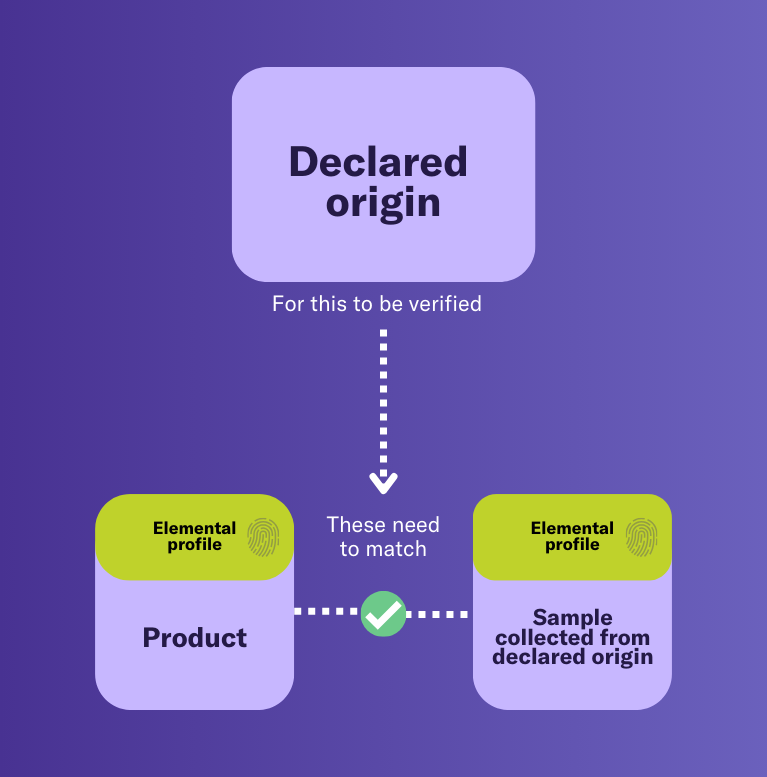
How can Origin Verification benefit your business?

Origin verification closes a critical gap in due diligence by independently verifying the product itself. Designed to integrate seamlessly with your existing sourcing and supplier assurance processes, it gives you the information you need to make confident decisions and stand behind the claims that matter most.

  • Protect investment in your brands, products and sourcing programmes.
  • Respond confidently to customer, regulator and stakeholder expectations.
  • Verify supplier claims before making high-value purchasing decisions.
  • Identify sourcing risks before they become commercial exposure.
Talk to an expert

Backed by 40+ years of forensic scientific research.

Paper based claims can be changed – but you can’t change naturally imprinted elements.

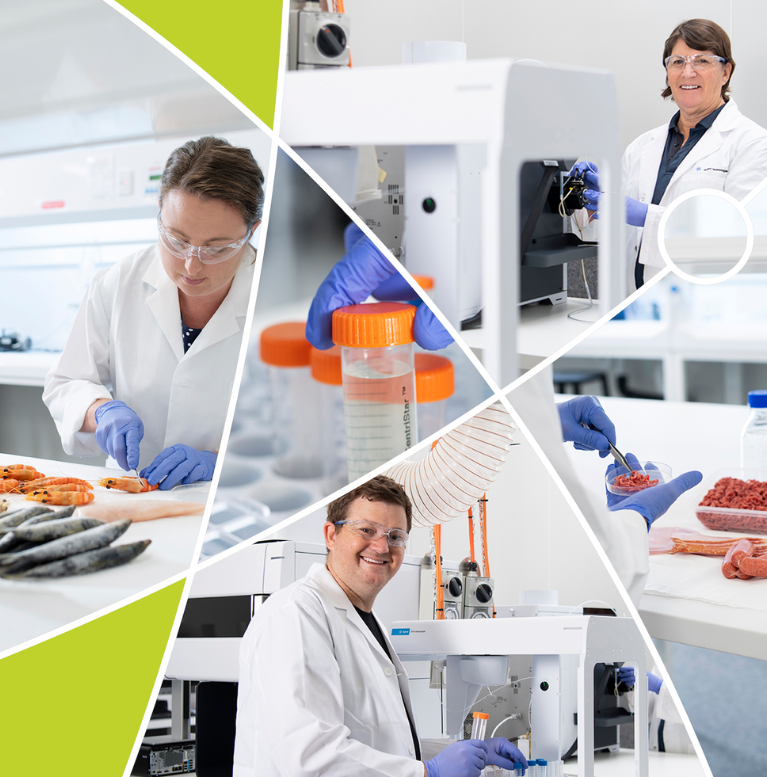
Our origin verification programmes combine decades of forensic scientific research with advanced analytical techniques to independently verify where products and materials really come from.
Using methodologies like Trace Element Analysis (TEA) and Stable Isotope Ratio Analysis (SIRA), we measuring naturally occurring characteristics within the product. This provides an independent source of evidence that can either support declared origin claims or identify inconsistencies requiring further investigation.

By combining both analytical methods, we can achieve even greater accuracy and precision than approaches relying on isotopic analysis alone, helping organisations verify origin at country, regional or, where appropriate, individual production-site level.

Explore origin science

FAQs

What is a stable isotope ratio analysis (SIRA) test?

Stable isotope ratio analysis measures the natural ratios of stable isotopes within a product. These patterns are influenced by environmental and geographical factors. When compared to verified evidence and reference sets, Stable isotope ratio analysis helps confirm whether a product’s claimed origin is plausible for that location. Source Certain uses SIRA alongside TEA to improve accuracy.

What is a trace element analysis (TEA) test?

Trace element analysis profiles the minute elemental composition of a product to create a chemical fingerprint. That fingerprint is matched against reference samples collected from known sites. Used in conjunction with SIRA, TEA enhances confidence in origin verification outcomes.

What is provenance testing and verification?

Provenance verification involves the scientific testing of physical products, such as seafood and coffee, to verify that they match the origin stated in digital or paper documentation. It verifies origin claims, validates related ESG and certification data, and helps detect issues such as substitution, mislabelling and adulteration.

Can you test for the country of origin?

Yes. Source Certain verifies whether products are consistent with claimed origins at the site, regional or country level by comparing test results with reference fingerprints from known harvest or extraction locations. This goes beyond a country of origin test and supports due diligence, EUDR readiness, and accurate origin claims for retail, brands and producers.

Do you provide origin certification services?

Source Certain provides verification, not certification. Scientific verification validates whether the physical product aligns with its claimed origin and can support third-party certifications and ESG reporting, but it is distinct from auditing site processes.

Which risks can origin verification address?

Typical exposures include food authenticity fraud, false claims, illegal sourcing linked to deforestation, substitution, mislabelling and adulteration. Scientific verification adds an evidence layer to digital traceability data to minimise misreporting risk.

How effective are QR codes and barcodes?

Traditional tracing methods, including packaging, barcodes, and labels supported by digital systems, are insufficient to guarantee the traceability of products to their origin in global supply chains. Their traceability is limited to the point where a label was first applied, and they are susceptible to tampering.


Origin verification across complex supply chains

Every supply chain is different, but the challenge is the same: making confident sourcing decisions based on information you can trust.

Explore how origin verification supports organisations across different industries and supply chains.

  • Forestry
  • Gold & Precious Minerals
  • Tomato Products
  • Seafood
  • Horticulture
  • Coffee & cocoa

Looking for timber identification and verification?

Our dedicated timber programme combines species identification with forensic origin verification to help organisations strengthen due diligence, verify sourcing information and support EUDR and deforestation-free sourcing requirements.

Actionable provenance insights for leaders

Talk to an expert