With vast quantities of SKUs, sourcing locations, and global logistics, there is a higher risk of products being mislabeled, counterfeited, or substituted in the supply chain. Origin traceability information captured in the chain of custody data is more susceptible to intentional or unintentional manipulation.
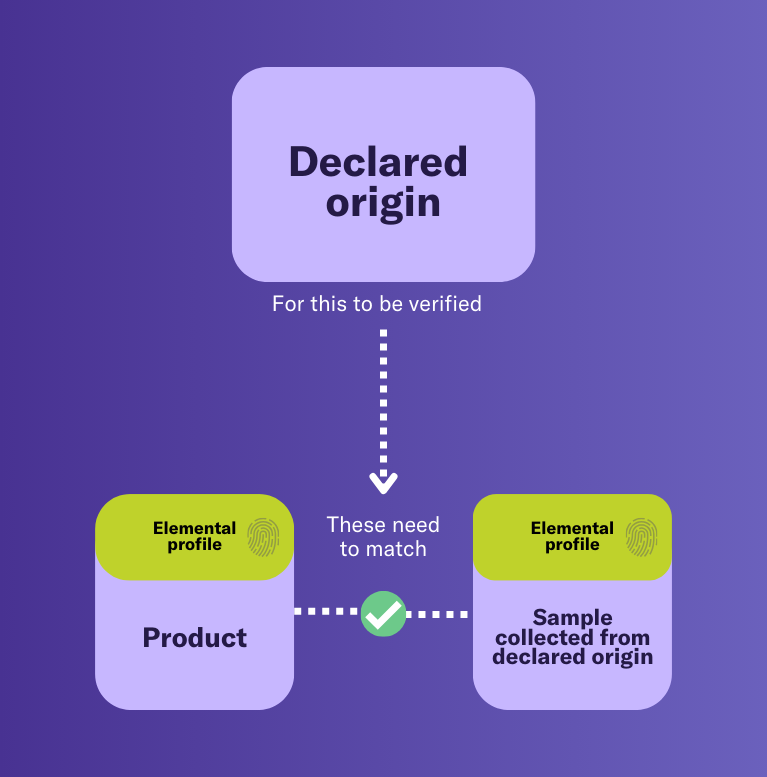
Scientific origin verification of the physical products being received and sold on the shelf can verify the sourcing information your team receives from suppliers and reports on, ensuring the products are coming exactly from where they claim to be.
The origin of a product connects to Environmental, Social, and Corporate Governance (ESG) commitments and claims delivered at harvest origin, including:
- Sustainable sourcing, deforestation-free supply chains, environmentally friendly production, slave-free labour, or organic farming methods.
- Origin verification validates critical origin information relevant to reporting on SDG and ESG-based sourcing goals.
- Reduce ESG risk by verifying your sourcing data to support sustainability reporting, confirm deforestation-free sourcing, and uphold modern slavery commitments.
- Regulators and stakeholders increasingly require more information about the origin of products for companies to meet their due diligence requirements, such as the European Union Deforestation Regulation (EUDR). For this reason, it is essential to implement a scientific service that provides evidence-based data for precise sourcing locations.